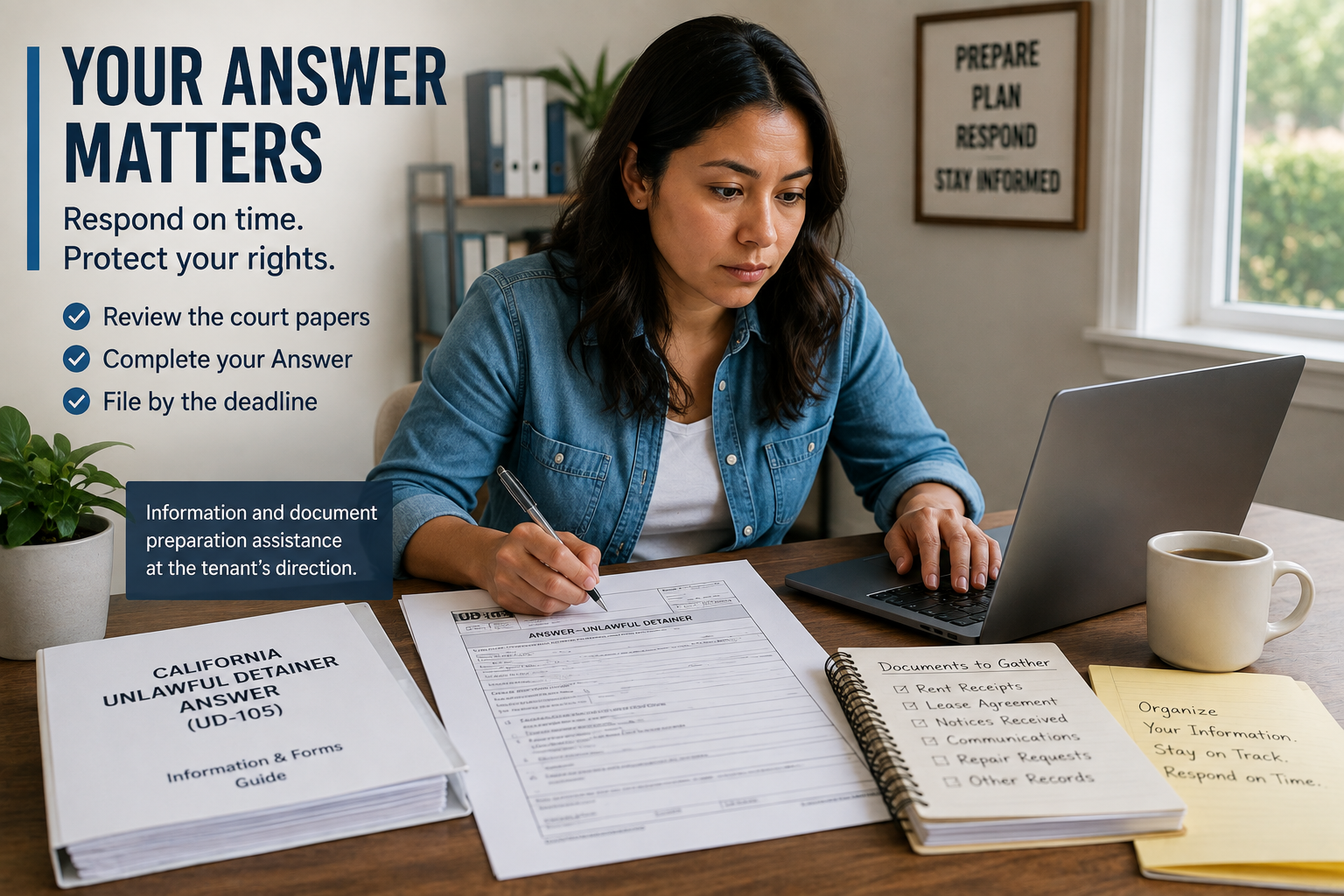
Received Court Papers? You May Need to File an Answer.
If you have been served with a Summons and Complaint—Unlawful Detainer, your landlord has started an eviction case in court.
This is different from receiving an eviction notice. You are now involved in a court case, and you may need to file a written response with the court.
The most common response is called an Answer—Unlawful Detainer (UD-105).
First: Find Your Deadline
If you were personally served with the Summons and Complaint, California Courts states that you generally have 10 court days to file your Answer.
The deadline can be different when the court papers were served another way.
Before preparing your response, determine:
- When you received the Summons and Complaint
- How the papers were served
- Which court is handling the case
- Your deadline to respond
Do not wait until the last day to begin preparing your response.
What Is an Answer?
An Answer is the document you file with the court to respond to the landlord’s Complaint.
The Answer allows you to:
- Respond to statements made in the Complaint
- Tell the court which statements you disagree with or are unsure about
- Identify facts and circumstances you want the court to consider
- Raise defenses that may apply to your situation
- Ask the court for certain relief available to you
California Courts uses form UD-105, Answer—Unlawful Detainer (Eviction) for this purpose.
Read the Complaint Carefully
Before filling out the Answer, read the landlord’s Complaint from beginning to end.
Pay attention to:
- Your name and the names of other defendants
- The address of the rental property
- The reason the landlord says you should be evicted
- The notice the landlord says was given to you
- The dates stated in the Complaint
- The amount of rent or other money claimed
- Any other facts or statements you believe are incorrect or incomplete
If you disagree with something in the Complaint, don’t simply ignore it.
Your Answer is your opportunity to respond to the allegations made against you.
What About Defenses?
A defense is a legal reason why the landlord may not be entitled to evict you.
Possible issues can include problems with the eviction notice, failure to maintain the rental property, retaliation, discrimination, or protections under state or local eviction laws.
Not every issue applies to every case.
California Courts provides information about common eviction defenses and explains that tenants should determine which defenses may apply to their circumstances.
What Information Should You Gather?
Before completing your Answer, organize the information related to your case.
Gather:
- Your lease or rental agreement
- The eviction notice you received
- The Summons and Complaint
- Rent receipts or payment records
- Emails and text messages with your landlord
- Photographs or videos of important conditions
- Repair requests and responses
- Notices or letters from your landlord
- Court documents
- Any other records related to the issues described in the Complaint
Keep the original documents in a safe place.
Filing Your Answer
After completing your Answer, it must be filed with the court handling your eviction case.
There may be a filing fee. If you cannot afford the filing fee, California Courts provides information about requesting a fee waiver.
Some courts may also have local forms or procedures, so check the court handling your case before filing.
Filing Is Not the Last Step
After you file your Answer, you generally must have a copy properly served on the landlord or the landlord’s attorney.
Keep copies of everything you file and everything you receive.
California Courts recommends keeping copies of the filed Answer and Proof of Service for your records.
We Can Help You Prepare
CaliforniaEvictionHelp.expert is designed to provide California-focused information and practical assistance with the eviction process.
We can help you understand:
- What the court papers mean
- What information belongs in your response
- How to organize the facts of your case
- What questions you should consider before completing your Answer
- How to prepare your response for filing
The goal is to help you understand the process and prepare your response accurately and completely.
Start Your Response
If you have received a Summons and Complaint, don’t put it aside.
Start by identifying your deadline, reading the Complaint carefully, and gathering the documents related to your case.
Get Started